


Introduction: What is Session Hijacking?
Imagine you’re logged into your bank account, social media, or email. Suddenly, a hacker takes over your session without needing your password. Scary, right? This attack is called session hijacking, a sneaky cybersecurity threat where hackers steal or manipulate your session to gain unauthorized access to your account.
In this article, we’ll explain how session hijacking works, common attack techniques, real-life examples, and how you can protect yourself.
How Does Session Hijacking Work?
When you log into a website, the server creates a session ID to recognize you. This session is stored in cookies, URL parameters, or headers, keeping you logged in without asking for your password repeatedly. However, if hackers steal this session ID, they can act as you—without knowing your actual password!
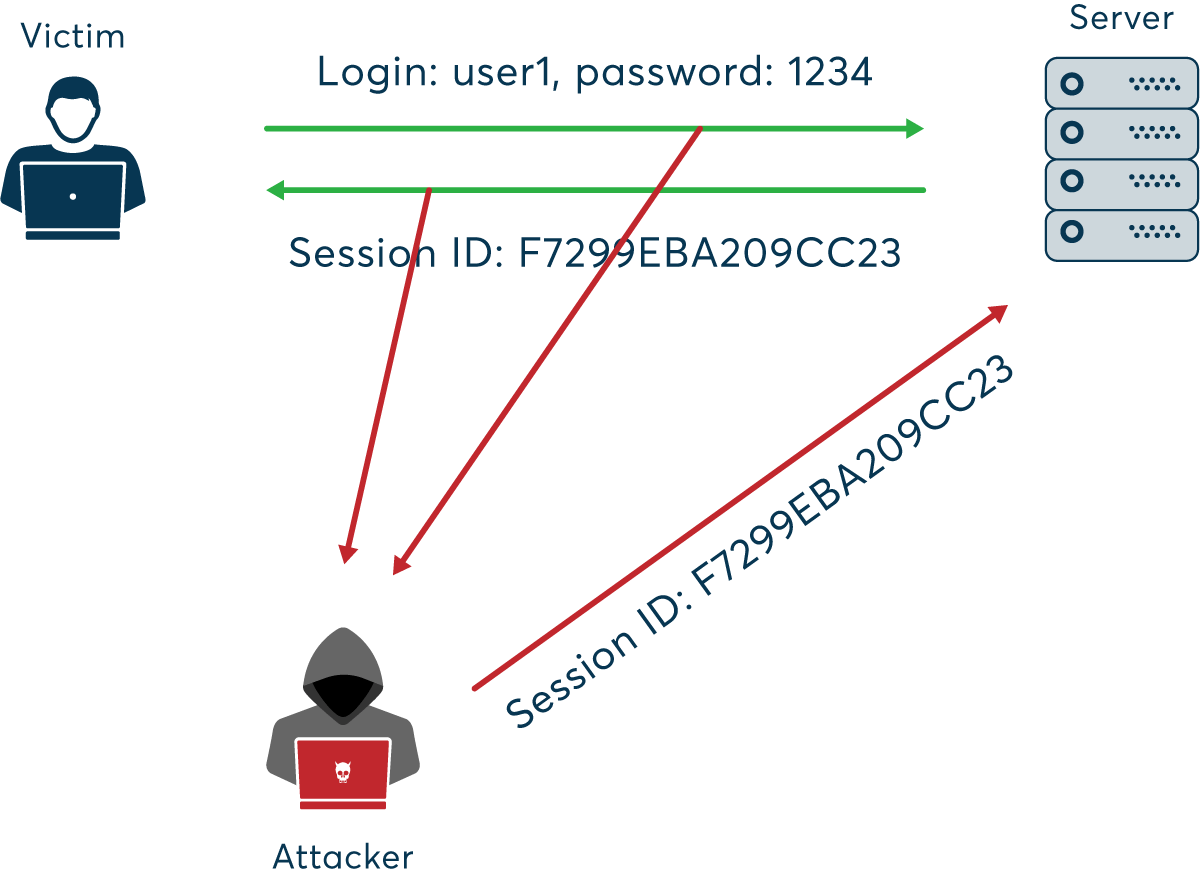
Steps in a Session Hijacking Attack:
- Session Creation – You log into a website, and the server assigns you a unique session ID.
- Session Theft – A hacker intercepts or guesses your session ID.
- Session Exploitation – The hacker uses the stolen session ID to access your account as if they were you.
Example: You log into an online shopping site on public Wi-Fi. A hacker nearby captures your session ID and places orders using your account.
Common Types of Session Hijacking Attacks
Hackers use various tricks to hijack your session. Here are the most common ones:
1️⃣ Session Sniffing
- Hackers use tools like Wireshark to capture data packets over an unencrypted network.
- Example: You’re on free airport Wi-Fi, and a hacker sniffs your session ID, gaining access to your online banking.
2️⃣ Cross-Site Scripting (XSS)
- Attackers inject malicious scripts into websites that steal session IDs when you visit the page.
- Example: You click a fake social media link that runs a hidden script, giving away your session details.
3️⃣ Session Fixation
- The attacker sets a known session ID and tricks the victim into using it.
- Example: You receive an email with a login link. Clicking it assigns you a session ID already known to the hacker.
4️⃣ Man-in-the-Middle (MITM) Attack
- The hacker intercepts communication between you and the server, stealing session data in real time.
- Example: You log into an online banking app on a compromised public Wi-Fi network.
5️⃣ Predicting Session IDs
- Some websites use weak or sequential session IDs, making them easy to guess.
- Example: A hacker writes a script to test thousands of session ID combinations until they find a valid one.
How to Prevent Session Hijacking (Stay Safe Online!)
Here’s how you can protect yourself and your website from session hijacking:
For Users:
✅ Use HTTPS – Ensure the website has an SSL certificate (🔒 symbol in the address bar). This encrypts your data.
✅ Avoid Public Wi-Fi – Hackers often target unsecured networks. If necessary, use a VPN for encryption.
✅ Enable Multi-Factor Authentication (MFA) – Even if hackers steal your session, MFA adds an extra layer of security.
✅ Log Out After Use – This prevents attackers from reusing your session.
✅ Use a Strong, Updated Browser – Modern browsers have built-in security features that prevent session hijacking attacks.
For Website Administrators:
✅ Secure Cookies – Use HttpOnly and Secure flags to prevent client-side attacks.
✅ Regenerate Session IDs – Assign a new session ID every time a user logs in or changes their password.
✅ Use Session Expiry & Timeouts – Shorter session durations reduce the attack window.
✅ Monitor for Unusual Activity – Track session behavior and terminate suspicious sessions.
✅ Implement Content Security Policy (CSP) – Prevent malicious script injections (XSS attacks).
Real-Life Session Hijacking Incidents
🔴 Facebook Hijacking Case (2010)
- Hackers used Firesheep, a browser extension, to steal Facebook sessions over unsecured Wi-Fi.
- Lesson: Facebook later implemented HTTPS to encrypt sessions.
🔴 Banking App Attack
- A hacker intercepted session IDs from a popular banking app using a MITM attack on public Wi-Fi.
- Lesson: Always enable MFA for banking apps.
Final Thoughts: Stay Vigilant, Stay Safe
Session hijacking is a dangerous yet preventable attack. By following security best practices, you can keep your online accounts safe from hackers. Whether you’re a user or a website administrator, implementing the right protections ensures your data remains secure.
Want to learn more about online security? Check out these resources:
📢 Have you ever encountered a session hijacking attempt? Share your experience in the comments below!

